Humanness Study or/and Cambria Explosion
As I am starting a new role on the Safety Annotation team at Cohere, I decided to check the founder’s words once again and watched a short interview with Nick Frosst. His advice for young founders was to follow curiosity, not only what seems optimal.
If Nick himself had followed what was “optimal” when he was an undergraduate, maybe he would have been trying to work with NFTs? He jokes about it.
While I am immersed in this AI universe, I am mostly seated with the model, looking at it and thinking through benchmarks. I find myself in this lonely but wholesome and candid moment, usually trying to be optimal. But today, I step out a little bit to ask what Frosst suggested.
I stop for a moment on this Saturday and ask myself: at this exact moment, am I asking the right questions during this time, while looking at the model and being so close to it? Am I willing to see only what everyone is pointing at, or am I also bringing genuine curiosity? Why do I do what I am doing?
I feel the excitement and the fatigue altogether in my role as an AI trainer.
As a writer, I have spent an entire life trying to understand what words do and mean. Trying to attach words to things might be easy, because a teddy bear is a teddy bear. But trying to match them — words — to a legitimate meaning is challenging, because a teddy bear is not only a teddy bear, but maybe a childhood memory, since words almost never entirely match a thought or feeling. The memories and stimuli around us give humans this opportunity to live through super-explosions of meaning.
“What I don’t know about the egg is what really matters. What I don’t know about the egg gives me the egg properly speaking,” wrote Clarice Lispector in her story The Egg and the Chicken.
The egg itself becomes this provoker of super-explosions of meaning, while remaining an egg resting on the table.
There is also a passage from Proust, when the character has his memory activated as the narrator brings a spoonful of tea mixed with madeleine crumbs to his lips. A spoon + madeleine = BANG = MEMORY.
“No sooner had the warm liquid mixed with the crumbs touched my palate than a shudder ran through me and I stopped, intent upon the extraordinary thing that was happening to me.”
In the human experience, words are not only words, thoughts are not only thoughts, and memories are not only memories. With so much context and nuance in our human experience, there is a lot of teamwork needed between humanists and tech workers to help our bots hold even a little of that.
Context and nuance are like a game — humanness — a human game that is not only related to words. The same applies to photographers and painters, since what a human-made image can capture at a determined moment can be something beyond seeing. We can play with what we want the other to see.
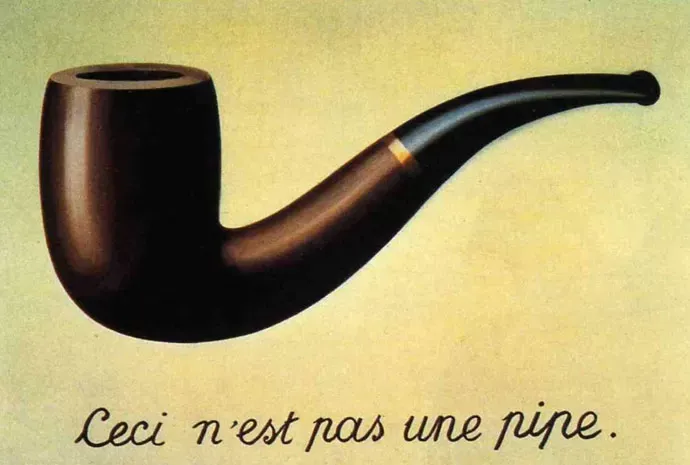
As an AI trainer, I feel the responsibility of a guardian trying to support and write rationales for tasks that support accuracy, safety, fairness, and diversity. At the same time, I try to offer a glimpse of teaching humanness.
One example is telling the model: when shaking hands, people usually look at each other. It is possible for one of them, or both of them, to look beyond each other, but usually we look at each other when shaking hands or talking.
So today, following only curiosity and the boredom of a long weekend — boredom being an inherently human experience and essential for inspiration — I am here, excited only for the sake of it, stepping out from evals and benchmarks for a moment, because it is good to have a conversation with thoughts that are only curious and not optimal.
A list of examples to think about:
Why do we usually look at our interlocutor while shaking hands?
Why do we mostly talk to someone while looking at them?
What do we gaze at or pay attention to when looking at one thing or someone?
How many thoughts can we have at once?
What are the things that make us turn our head back? Sounds? Thoughts?
Why might each explicit human word want to carry an implicit meaning and context along with it? For example, can we imagine a world without punctuation or emojis in our vocabulary? They can carry tone and sometimes add major contextual significance to our words.
Why do we sometimes not say what we think?
Why, at times, is there fear and shame in being human and natural?
Why do we think human tears must be hidden when we are close to strangers?
DISCLAIMER
I took a class in the Department of Earth Sciences called Earth System Evolution. It was the first time I learned about the evolution of some animals that lived billions of years ago. It was a challenging class for me, as I had to sketch fossils by hand. Although little was saved in my memory from this class, something stayed with me.
We had a natural explosion called the Cambrian Explosion, which was a revolutionary burst of ecological diversification in the oceans. With this explosion, there was an increase in sophisticated behavior, such as animals developing eyes, moving with more intention, hunting, hiding, protecting themselves, and responding to their surroundings in more complex ways.
A simple example is vision. Once some animals developed eyes, the world changed.
I am writing all this as a way to think: oh well, Camila, don't get too attached to these times, or to any time. Work and live for the good, for goodness, but remember: we are small. Earth is small. And, to compare it as an analogy, the AI explosion we are seeing now — different from the Cambrian Explosion, provoked by humans — is an artificial (still real) explosion shaping our behavior and ecology, and will change the world. But one day, it may also be only a single sentence in the notebook of a student, maybe on another planet.
![Uploading Cambria.jpeg...]